
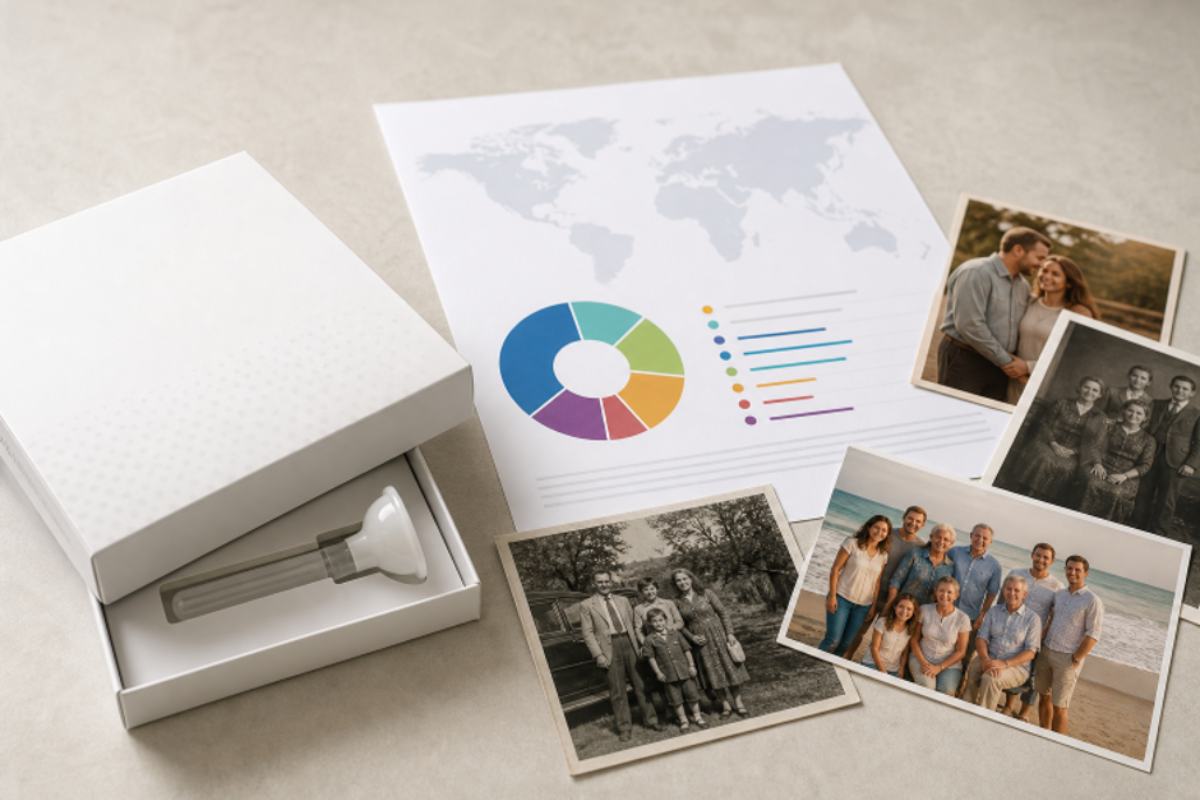
DNA testing can be a meaningful starting point for learning about family origins, finding relatives, and checking long-held family stories. Choosing the best ancestry DNA test is only the first step, though. The real value comes from reading the results carefully, asking good questions, and comparing genetic clues with records.
A DNA report is not a complete biography of your family. It is a collection of estimates, inherited segments, and potential connections. Used patiently, it can help you build a more accurate family history while leaving room for uncertainty, privacy, and the experiences of living relatives.
Table of Contents
Why DNA Results Need Context
Genetic ancestry reports are useful clues, not final proof. Family stories may be incomplete, surnames can change, records may be missing, and migration can make a family line difficult to trace. DNA can support a theory, challenge a mistaken assumption, or reveal a branch that deserves more research.
It is also wise to prepare emotionally before reviewing matches. An unknown close relative or unexpected parentage pattern can affect identity and family relationships. The realities of testing can include both helpful answers and difficult feelings, especially for so thattees, donor-conceived people, and others searching for missing family connections. Preparing for unexpected DNA discoveries can help people approach the process with appropriate care.
What Ancestry Percentages Really Mean
Ethnicity or ancestry percentages are statistical estimates created by comparing your DNA with reference populations. They do not provide a precise count of ancestors from modern countries, nor do they define nationality, culture, race, or personal identity.
- Broad regional results generally carry more weight than very small estimates.
- Neighboring populations can share genetic similarities, so companies may classify the same DNA differently.
- A result can change when a testing company updates its reference panel or analysis method.
- An ancestor’s birthplace and cultural background may not match the region assigned in a DNA report.
Treat a surprising percentage as a lead to investigate. Look for matching family records, geographic patterns, and DNA relatives before adding a conclusion to your tree.
How to Read DNA Matches
DNA matches are often more useful for genealogy than ethnicity estimates. A match shares inherited DNA with you, and the amount of shared DNA helps a service suggest a possible relationship range. Close matches usually provide stronger evidence, while distant matches may point to a shared ancestor many generations back.
Start With Known Relatives
Identify cousins, aunts, uncles, or other matches whose place in your family is already known. Then use shared-match tools to see which other people connect to that same branch. This can help separate maternal and paternal groups, especially when your tree has gaps.
Keep notes for each important match, including the match name, predicted relationship, shared relatives, family surnames, and locations mentioned in their tree. Patterns become easier to see when they are recorded in one place.
How to Compare Results With Family Records
The strongest family history combines DNA with documents. DNA may show that two people are related, but records can provide names, dates, occupations, residences, and the context of their lives. Start with birth, marriage, death, census, immigration, military, land, church, and newspaper records when available.
Compare places associated with your matches with those found in older documents. If several matches descend from families in the same county where your great-grandparent lived, that is a useful theory to test. Confirm a relationship with multiple sources rather than relying on a single tree or a single record.
Why Results Differ Between Testing Services
Different testing services can produce different regional estimates without either report being automatically wrong. Each company uses its own reference populations, regional labels, and algorithms. Some regions also have more available comparison data than others.
Siblings can receive different results, too. They share the same parents, but each sibling inherits a different mix of DNA segments. One sibling may show a stronger estimate connected to a particular branch, while another inherits less DNA from that same branch.
How to Handle Unexpected Discoveries
When a result conflicts with family expectations, pause before acting. Do not make public claims or send accusatory messages based on one percentage or one unfamiliar match. Look for additional matches, shared-match clusters, records, and timelines that either support or weaken the theory.
Genetic relative-finder services can reveal information that changes long-held beliefs about relatives and personal history. Research on the experiences of people using these services shows that unexpected findings are not unusual, which is why patience and respectful communication matter. People who learn new family information through DNA matching may need time to decide whether, when, and how to contact relatives.
A Simple DNA Privacy Checklist
Before DNA testing, sharing, downloading, or uploading DNA data, review the current privacy choices offered by every service involved. Ask yourself:
- Who stores my sample and genetic data?
- Can I delete my account, sample, or data later?
- Can I opt out of relative matching or research participation?
- What happens if I upload raw data to another website?
- How could my result affect relatives who never chose to test?
Read the actual policy and consent settings, not just promotional summaries. Privacy options can change over time.
A Step-by-Step Family History Research Plan
- Write down known names, dates, places, stories, and unanswered questions.
- Build a basic tree beginning with parents, grandparents, and great-grandparents.
- Review ethnicity estimates, matches, and lineage tools separately.
- Label known matches as maternal, paternal, or uncertain.
- The group shared matches that may belong to one family branch.
- Test every theory against historical records and timelines.
- Contact matches with short, respectful messages and no assumptions.
- Save links, screenshots, sources, and research notes in one organized file.
Common Mistakes to Avoid
- Assuming an ethnicity result proves citizenship or cultural identity.
- Treating a tiny percentage as proof of a recent ancestor.
- Accepting every public family tree without checking evidence.
- Ignoring records because DNA results seem more exciting.
- Contacting relatives with demands, accusations, or overly personal questions.
- Uploading raw DNA data without reviewing separate privacy terms.
Final Takeaway
DNA ancestry results work best as part of an evidence-based process. Percentages can suggest directions, matches can reveal possible connections, and historical records can add names, places, and human stories. By combining all three with patience and care, you can build a family history that is more reliable and more meaningful than any single chart or map.